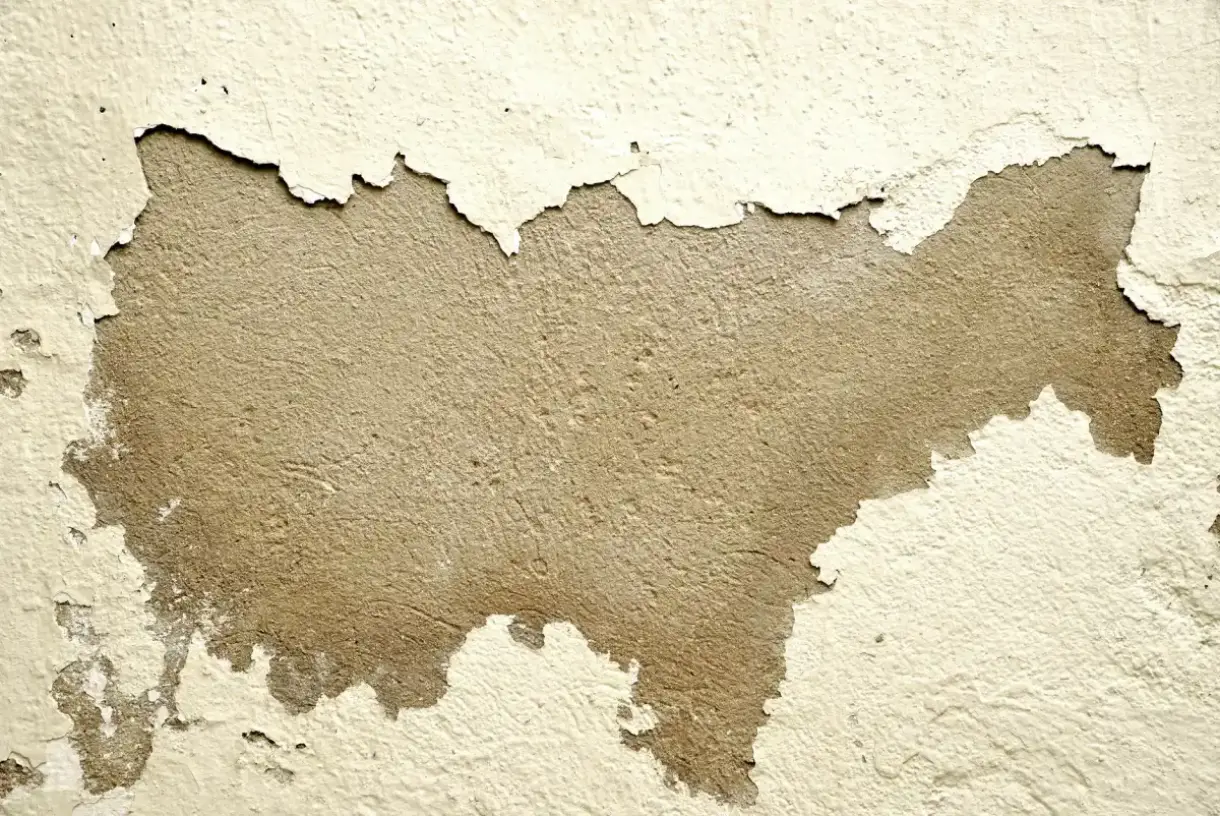
Water-Damaged Drywall Repair in Green Bay, WI — Removal, Replacement and Refinishing
Board compromised by an ice dam, a frozen line, or spring seepage removed and replaced across Green Bay and Brown County — once the source is fixed and the cavity reads dry.
Water-Damaged Drywall Repair in Green Bay, WI
Green Bay Elite Drywall is your local resource for water-damaged drywall repair throughout Green Bay and Brown County. We work with experienced drywall professionals who replace compromised board only after the water has been stopped and the structure has dried.
Water-damaged drywall repair has a strict order of operations, and getting it wrong is the most expensive mistake in this category. The source has to be stopped. The cavity has to be dried and verified dry with a meter. Only then does board go back. Closing a wall over framing or insulation that still holds moisture creates a problem you cannot see and will not smell for months, and by then the repair comes out again.
The second thing that catches people out is how far the damage extends. Gypsum wicks water upward well past anything visible, so the stain line is not the damage line. Finding the real edge — by touch, by probing and with a meter — is the part of this job that decides whether it holds.
In Green Bay this work has a season. We average around 56 inches of snow against a national average nearer 28, and most of the water damage in this market arrives between January and April in three forms. Ice dams, where meltwater backs up under the shingles and enters at the eave, showing up at ceiling perimeters and the tops of exterior walls. Frozen supply lines in exterior walls, which split in the cold and then flood the cavity when they thaw. And spring seepage as a heavy snowpack melts into ground that is still frozen four feet down and cannot absorb it.
What’s Included in a Green Bay Water-Damaged Drywall Repair Quote
- Work started only once the source is stopped and the cavity is verified dry
- Actual extent of moisture traced beyond the visible stain line
- Compromised board cut back to the centers of studs or joists
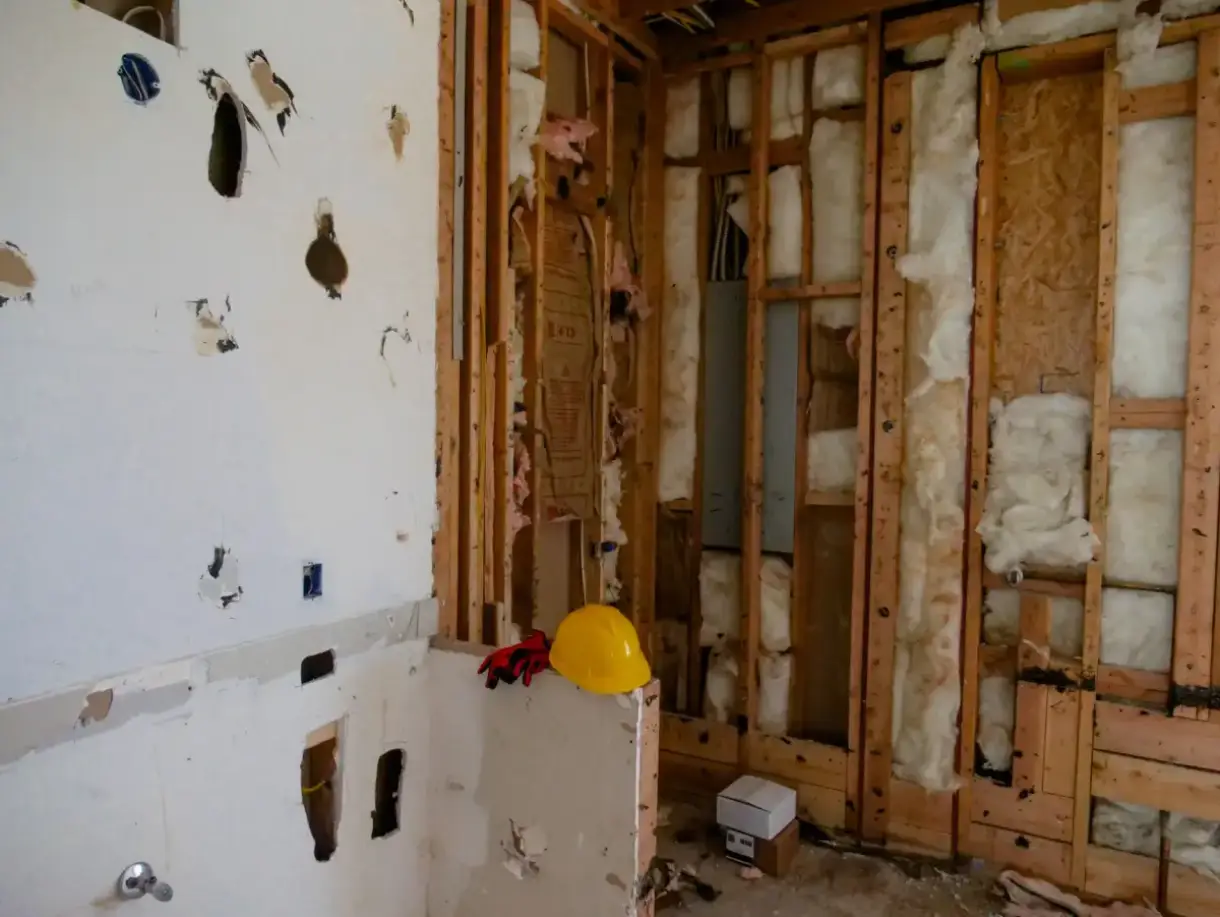
- Insulation checked and removed where it has held water
- Framing inspected for staining, softening and fastener corrosion
- Exterior wall cavities checked for whether insulation was displaced or compressed
- New board taped, coated and feathered into the surrounding surface
- Texture matched and the repair sealed with a stain-blocking primer
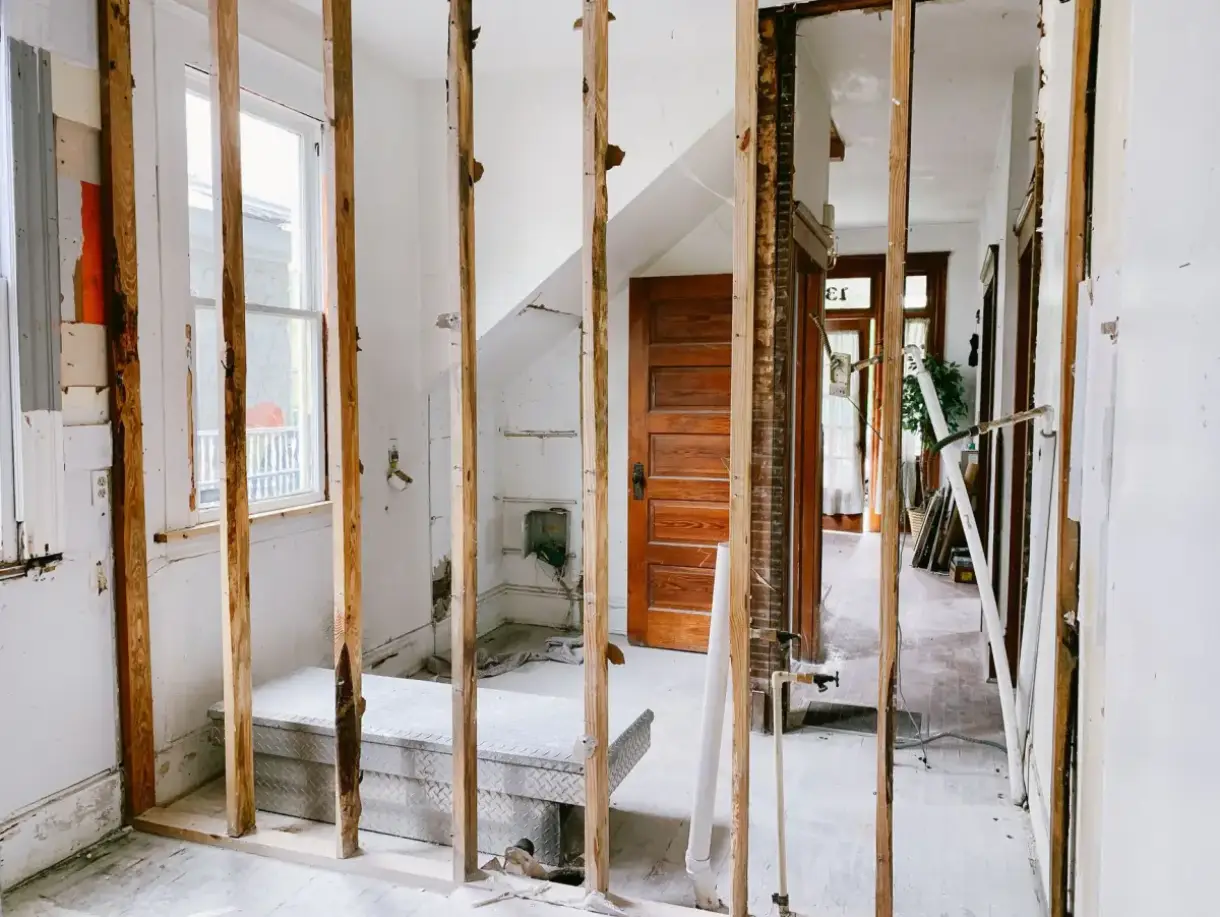
Water-Damaged Drywall Repair in Green Bay, WI
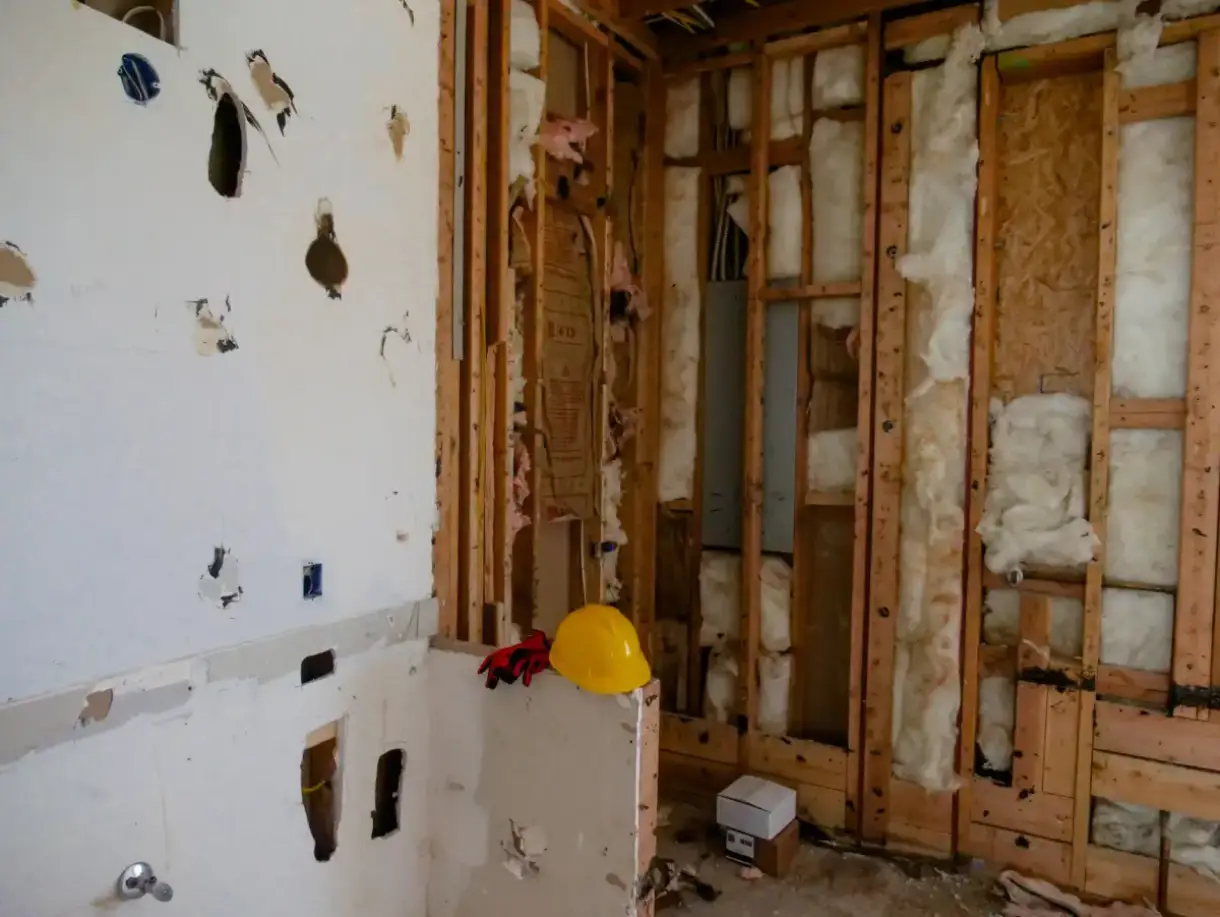
Water-Damaged Wall Repair
Walls take water from three directions and each leaves a different signature. From above — the ice dam case — it enters near the top plate and runs down inside the cavity, often appearing well below where it got in. From a line inside the wall, it shows as a localized soft area near the run, and in this climate that frequently means a supply line in an exterior wall that froze and split. From below, it wicks upward from the bottom plate and leaves a horizontal line marking how high the gypsum drew moisture rather than how high the water stood.
Water-Damaged Ceiling Repair
A stained ceiling is more urgent than a stained wall, because it holds saturated board overhead against gravity and wet gypsum loses strength quickly. A ceiling that has gone soft or begun to sag under a stain is a safety question before it is a cosmetic one. Locating the source matters more here than anywhere, because water travels along the top of a ceiling before finding somewhere to come through — and with ice damming the entry point is at the eave while the stain can appear several feet inboard.
Damaged Drywall Removal
Getting the compromised material out, which sounds simple and is where the judgment sits. The cut line is set beyond the moisture rather than at the stain, and board comes out to the centers of framing members so the replacement has bearing. Insulation gets pulled and inspected — fiberglass that has been wetted holds water against framing long after the surface feels dry, and in an exterior wall it also loses much of its thermal value once it has been saturated and compressed, which matters in a climate where that wall is doing real work.
Drywall Replacement After Water Damage
New board goes in only after the cavity reads dry on a meter rather than feeling dry to a hand. In an exterior wall the insulation goes back properly at full loft before the board does, because a cavity refilled carelessly leaves a cold spot that will condense the following winter and produce a new problem in the same place. Panel selection is part of the repair too: in a bathroom, a laundry, or anywhere the same event could recur, moisture-resistant board is sensible even where standard board was there before.
Drywall Finishing After Water Damage
The finish work that makes the repair disappear, plus one step specific to water damage. Joints get taped, coated in sequence and feathered wide, texture is sampled and matched, and then the repair is primed with a stain-blocking primer rather than a standard one. Water stains bleed through ordinary latex primer and reappear through the finish paint weeks later — a genuinely common failure on otherwise competent repairs, and the one most likely to bring somebody back to a job they thought was finished.
Signs You Need Water-Damaged Drywall Repair
- Staining at the top of an exterior wall or a ceiling perimeter after a thaw
- Board that feels soft, spongy or crumbling when pressed
- Bubbling, peeling or lifting paint over a defined area
- A localized wet patch on an exterior wall after a deep cold snap
- A horizontal line low on a basement wall after spring melt
- A musty smell in a room with no visible surface damage
How Water-Damaged Drywall Repair Works
- 1
Confirm the Source Is Actually Stopped
Nothing starts until the water has been dealt with, and in this market that frequently means waiting for a season to turn rather than for a trade to finish. An ice dam is not fixed by clearing it once — it comes back next winter unless the attic insulation and ventilation causing it are addressed. A split supply line in an exterior wall needs the plumbing repaired and the reason it froze understood. Board installed over an unresolved source is a repair with a countdown on it, and the second removal costs more because it takes new material with it.
- 2
Find the Real Edge of the Damage
The stain marks where water sat long enough to leave a trace; it is not where the moisture reached. Gypsum draws water upward through its core, so the compromised area routinely extends several inches to a foot beyond anything visible. The edge is found by touch, by probing for softness, and with a moisture meter reading through the surface. With ice dam damage there is an extra step, because water entering at the top plate can travel down a cavity and leave the upper portion looking untouched while the material lower down is saturated.
- 3
Remove, Dry, and Verify With a Meter
Compromised board comes out to framing centers. Wetted insulation is removed rather than left to dry in place, since fiberglass holds water against framing and dries far more slowly than open air suggests. Then the cavity is dried with air movement and dehumidification and verified with a meter before anything closes it. Winter has one advantage here: heated indoor air in a Green Bay January is extremely dry, which speeds drying considerably compared with the same cavity in August. It is the one part of this work the season makes easier.
- 4
Reboard, Reinsulate Properly, Finish and Seal
In an exterior wall the insulation goes back at full loft with no gaps or compression, because a poorly refilled cavity becomes a cold spot and a cold spot becomes condensation the following winter. Then new panel, joints staggered against the existing board, fastened into the framing the cut was made to. The normal finishing sequence follows — tape embedded, coats built and feathered wide, texture sampled and matched. The last step is the stain-blocking primer, without which residual staining migrates through and resurfaces weeks after everything looked finished.
What Does Water-Damaged Drywall Repair Cost in Green Bay, WI?
- Area of board that has to come out, which is larger than the visible stain
- Whether the damage is on a wall or a ceiling
- Whether insulation has to be removed and replaced
- Drying time and equipment required before rebuilding can start
- Panel type, since moisture-resistant board costs more than standard
- Texture matching difficulty on the surrounding surface
- Access and whether flooring, trim or cabinetry has to be worked around
- Whether the source work by another trade has to happen first
| Service | Cost Per Sq. Ft. | Typical Job |
|---|---|---|
| New Drywall Installation | $1.50 – $3.00 per sq. ft. | $1,000 – $3,254 per project |
| Small Patch or Hole | $75 – $350 per patch | $300 – $500 for a contractor visit |
| Larger Wall Repair | $500 – $800+ per patch | Scales with how much board comes out |
| Ceiling Repair | $297 – $472 per hole | $220 – $1,300 for the full ceiling |
| Water-Damaged Drywall | $500 – $2,500+ | Depends how far the moisture travelled |
| Texture Matching | $150 – $450 per patch | Runs 30 – 40% above a smooth finish |
Based on 2026 national cost-guide data from Angi, HomeGuide, and Homewyse. Green Bay and Brown County rates land above or below these ranges depending on ceiling height, access, and texture type. Ice-dam ceiling damage is the row that most often exceeds the guide, because wet insulation above the board has to come out and dry before anything closes back up. You get a firm number after someone sees the job.
The variable that moves this cost most is how much board actually has to come out, and quoting from the stain line produces a low number and an incomplete repair. The Green Bay-specific factor is sequencing rather than price: with ice dam damage in particular, the cheapest version of this job is the one done after the attic work, not before. Repairing a ceiling in February that will take the same water again the following January is the most expensive way to buy a repair, and it is the most common one.
What to Look for in a Green Bay Water-Damaged Drywall Contractor
They Ask What Caused It
Ice damming, attic frost and a split supply line produce similar stains and need different fixes. A contractor who repairs without asking is scheduling a return visit.
They Refuse to Start Until It Reads Dry
A meter reading, not a calendar and not a hand on the wall. Closing a cavity that still holds moisture is the failure that costs twice.
They Put the Insulation Back Properly
A cavity refilled with compressed or gapped insulation becomes a cold spot, and in this climate a cold spot becomes condensation the following winter.
They Use a Stain-Blocking Primer
Water stains migrate through standard primer and reappear weeks later. It is a small step and skipping it undoes the whole repair visually.
Residential & Commercial Water-Damaged Drywall Repair
Residential
Residential water damage here is seasonal and concentrated: ice dams entering at the eaves, supply lines freezing inside exterior walls, and spring melt finding its way into basements through ground that is still frozen underneath. All three arrive between January and April.
Commercial
Commercial water damage adds containment requirements, occupied-space scheduling and rated assemblies that have to be reinstated rather than simply closed. That work is covered on the commercial drywall repair page.
When Water-Damaged Drywall Repair Isn’t the Right Call
- Situations where the leak or ice dam has not been resolved. Board installed over an active source comes out again and takes new material with it.
- Roofing, insulation, ventilation or plumbing repair. Those belong to the trades that own them and they come first.
- Mold remediation, which is a separate trade with its own protocols. Where growth is established, that is handled before drywall work begins.
- Cavities that have not been dried and verified. A repair scheduled around a deadline rather than a meter reading fails quietly.
- Addresses outside the Green Bay metro area.
Frequently Asked Questions
- How do I know if my damage is from an ice dam or something else?
- Location and timing are the clues. Ice dam damage appears during or just after a thaw, and it enters at the eave — so it shows at ceiling perimeters and the tops of exterior walls, often on the north side or wherever snow lingers. A plumbing failure shows as a localized wet area near a fixture or a run and is not tied to the weather. Attic frost melting looks like an ice dam but appears further inboard rather than at the perimeter. The attic usually settles the question, which is why that is where a proper assessment starts.
- A pipe in my exterior wall froze and burst. What happens to the drywall?
- It comes out, and usually more of it than the visible damage suggests, because a split line under pressure puts a lot of water into a cavity quickly and it spreads along the bottom plate. The insulation in that bay comes out too — it will be saturated and it holds water against the framing. Once the plumbing is repaired and the cavity is dry, it is worth asking why that line froze before closing the wall, because the answer is usually a gap in the insulation or an air leak, and putting the board back without addressing it invites a repeat.
- How long does drywall need to dry before it can be replaced?
- There is no fixed number, which is why a meter is used rather than a calendar. It depends on how much water was involved, how long it sat, whether insulation was wetted, and the conditions. Winter helps here — heated indoor air in a Green Bay January is very dry and pulls moisture out quickly, so a cavity can dry faster in February than the same one would in August. With air movement and dehumidification a modest wall cavity might be dry in a few days; a saturated one with wet insulation takes considerably longer.
- How far past the stain should the board be cut?
- Past the moisture, which is usually further than the stain suggests and is established with a meter rather than by eye. Gypsum wicks water upward through its core, so a stain stopping twelve inches up commonly has damp board above it. With ice dam damage the pattern can be the reverse — water enters high and runs down, leaving the top looking fine and the lower cavity saturated. Practically the cut is made to the nearest framing centers beyond the verified moisture edge.
- Why did the stain come back through the new paint?
- Because the area was primed with a standard latex primer rather than a stain-blocking one. Water staining contains soluble compounds that migrate through ordinary primer and finish coats and reappear as a yellow-brown shadow weeks after everything looked finished. A shellac-based or oil-based stain-blocking primer prevents it. This is among the most common failures on otherwise competent water damage repairs and it is entirely avoidable.
- Should I wait until the ice dams are fixed before repairing?
- Yes, in almost every case. Clearing an ice dam once does not stop it forming again — it forms because heat escaping into the attic melts snow on the roof, which refreezes at the cold eave. Until the insulation and ventilation up there are addressed, the same water comes back next winter, and the second event does more damage than the first because it lands on material already weakened. Repairing the ceiling first is the expensive order of operations and it is the one most people follow.
Learn More
- EPA Mold and Moisture Guidance — federal guidance on drying timelines, remediation thresholds and moisture control
- National Weather Service Green Bay — local snowfall and temperature records relevant to ice dam and freeze risk
- Gypsum Association — technical guidance on gypsum panel performance after water exposure
Need Water-Damaged Drywall Repair in Green Bay, WI?
Tell us what’s going on and get an on-site estimate — no charge for the visit, and no obligation to book the work.
Get My Free Estimate