Drywall Contractors in Pulaski, WI — Residential & Commercial Drywall Specialists
Repair, plaster blending, texture matching and installation across Pulaski, a compact village whose oldest blocks went up in the 1880s and 90s and whose newer edges are board throughout.
Green Bay Elite Drywall is your local resource for drywall work throughout Pulaski, WI. We work with experienced drywall professionals who hang, tape and finish board in Northeast Wisconsin homes and commercial spaces every week.
Pulaski is small and dense in a way that changes the work. The village occupies well under three square miles and has an old core built up from the 1880s onward, when Polish immigrants settled the farm country northwest of Green Bay and a Franciscan monastery established in 1887 gave the community its center. Housing from that founding period is plaster over wood lath. Housing on the edges is board. In a village this compact, both are within a few blocks of each other.
The other thing worth knowing about Pulaski is jurisdictional. The village sits in three counties — Brown, Oconto and Shawano — with the large majority of residents in Brown. It rarely changes what happens on a wall, but it can change which office answers a question about a specific parcel, and that is cheaper to establish before a project than during one.
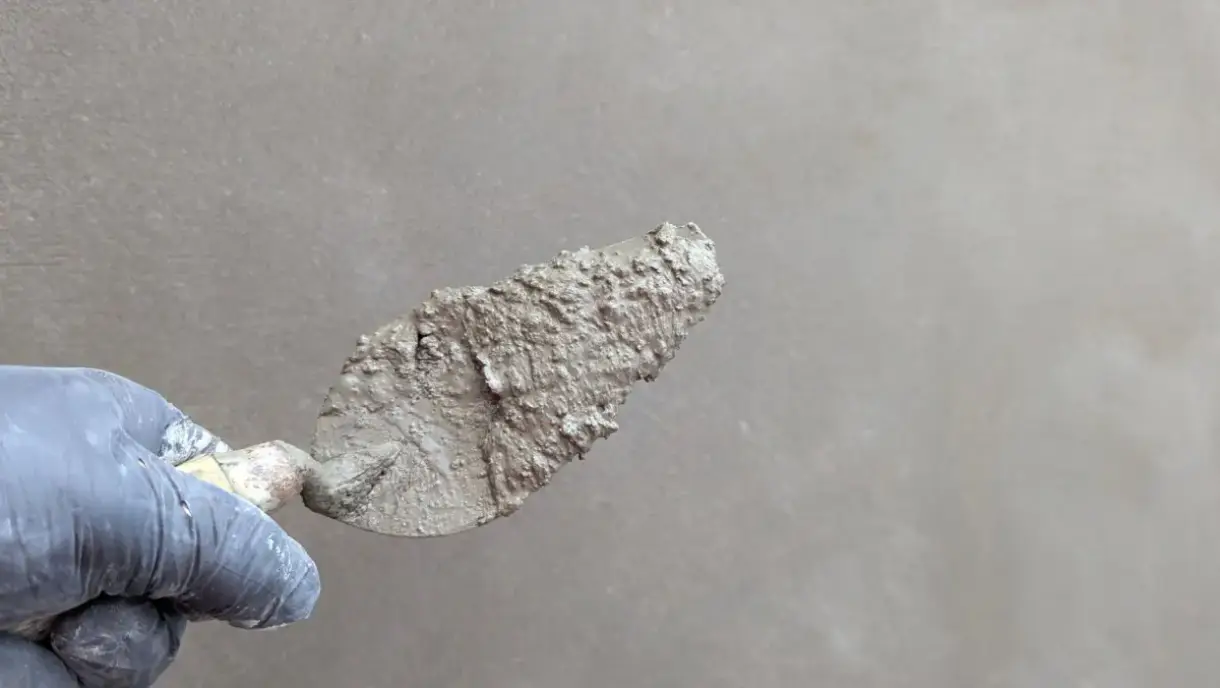
Drywall Services Available in Pulaski, WI
Pulaski runs a genuine mix rather than leaning one way. Plaster repair and texture matching come up in the old village core, drywall replacement where an original wall has been patched past patching again, and installation work on the newer streets and in outbuilding conversions. Commercial and institutional work here tends to mean an older masonry building with a later addition attached, which is two different wall systems in one job.
Residential Drywall
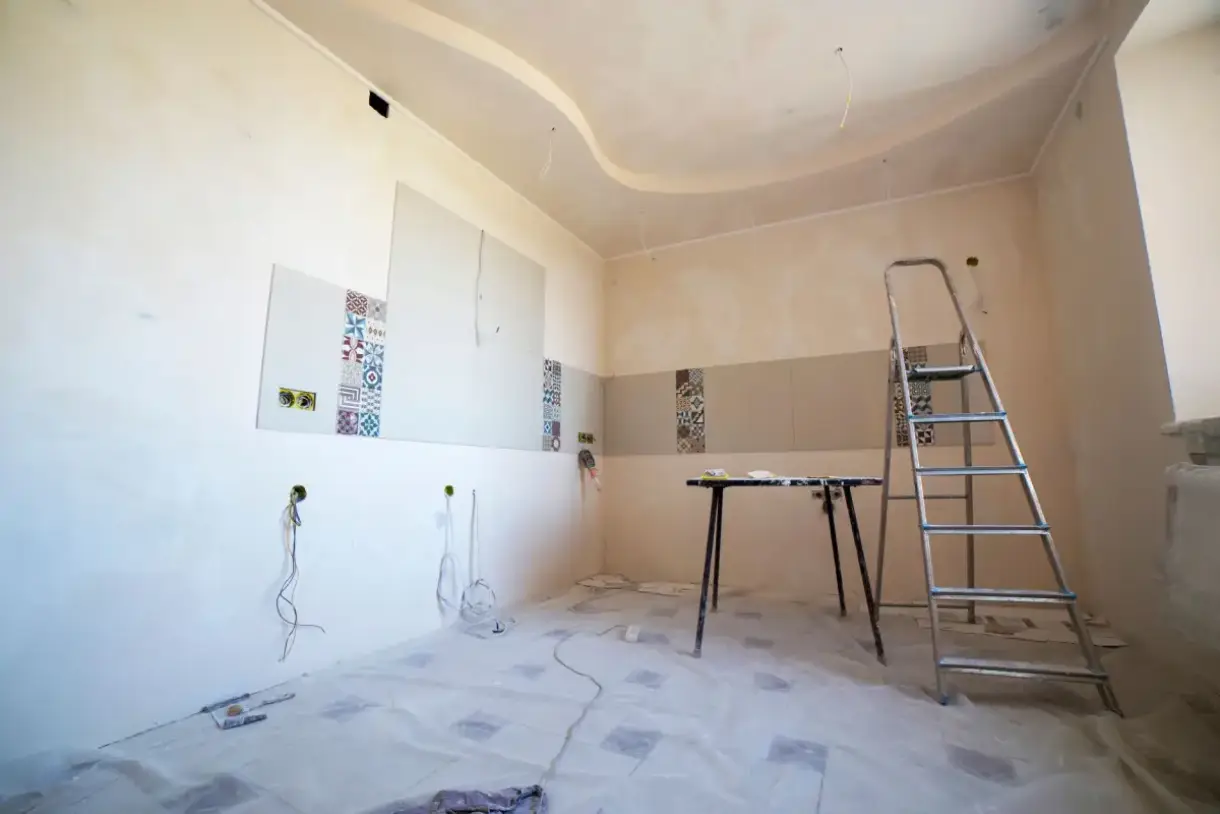
Drywall Installation Process for Pulaski Properties
- 1
Walk the Framing and the Conditions
The estimate comes from the space rather than a phone description, and in this climate it comes from the conditions as well. Framing gets checked for plane, because a stud bowed a quarter inch will telegraph through finished board and no compound fixes it afterward. Fastener backing gets confirmed where fixtures and cabinets will mount later. Panel type is decided room by room. And the heat situation gets established honestly — whether the building will be at a workable temperature through the finishing phase, because that determines the schedule more than the crew size does. In Pulaski this step settles which wall system is actually in front of you, because the old core and the newer edge are only a few blocks apart in a village this compact.
- 2
Hang the Board
Ceilings first, then walls, so wall panels support the ceiling edge and the corner closes tight. Panels run perpendicular to framing where the layout allows, which puts each sheet across more members and spreads any movement. Seams stagger so no two joints stack, and joints stay away from door and window corners where stress concentrates. Screws go in at the assembly's spacing, set below the paper without tearing it. On ceilings the panel thickness follows the framing spacing rather than the price list, because 1/2 inch board on 24-inch centers develops a visible sag long before anything else on the job fails.
- 3
Tape and Coat at a Pace the Building Allows
Tape is embedded in a wet bed coat at every seam and inside corner, corner bead is set and checked for straightness, then fill and finish coats go on, each feathered wider than the last. Every coat dries completely before the next — this is the fixed constraint and adding people does not shorten it. In a cold or unheated building it lengthens considerably, which is where setting-type compound earns its place: it cures chemically rather than by evaporation and can be recoated sooner. What it cannot do is replace drying on the final coats that get sanded and seen.
- 4
Sand, Match, and Hand Over
Sanding is taken to the finish level agreed at the start, checked under the room's actual lighting rather than a work light. A wall that passes under a bulb held close can still show every seam when the real fixtures go on and winter daylight crosses it at a low angle. Where new board meets existing surfaces, the texture is sampled from the original, reproduced on scrap, adjusted, and only then applied. Dust gets removed rather than moved around, and the surface is left genuinely ready for primer instead of nearly ready. Where new work meets a plaster wall here, the transition gets feathered wide and skim-coated rather than taped tight — a tight seam between plaster and board telegraphs within a season.
Fix the Cause, Then the Ceiling
A phone number and a truck in the driveway don't make a company. Here's what's actually different about ours for a job in Pulaski, WI.
The Cause Gets Named, Not Just the Damage
A stained ceiling in this climate usually has something above it still going on. You get told what is actually causing it, even when the honest answer is that another trade needs to go first.
One Relationship, Start to Final Coat
Your details don't get sold to whoever bids fastest. The same experienced drywall professional runs the job from the first walkthrough through the last pass with the sander.
Repairs Meant to Survive a Winter
Refilling the same screw pop every March isn't a repair, it's a routine. Fasteners get set back into solid framing and the surface refinished so the fix holds through the next heating season.
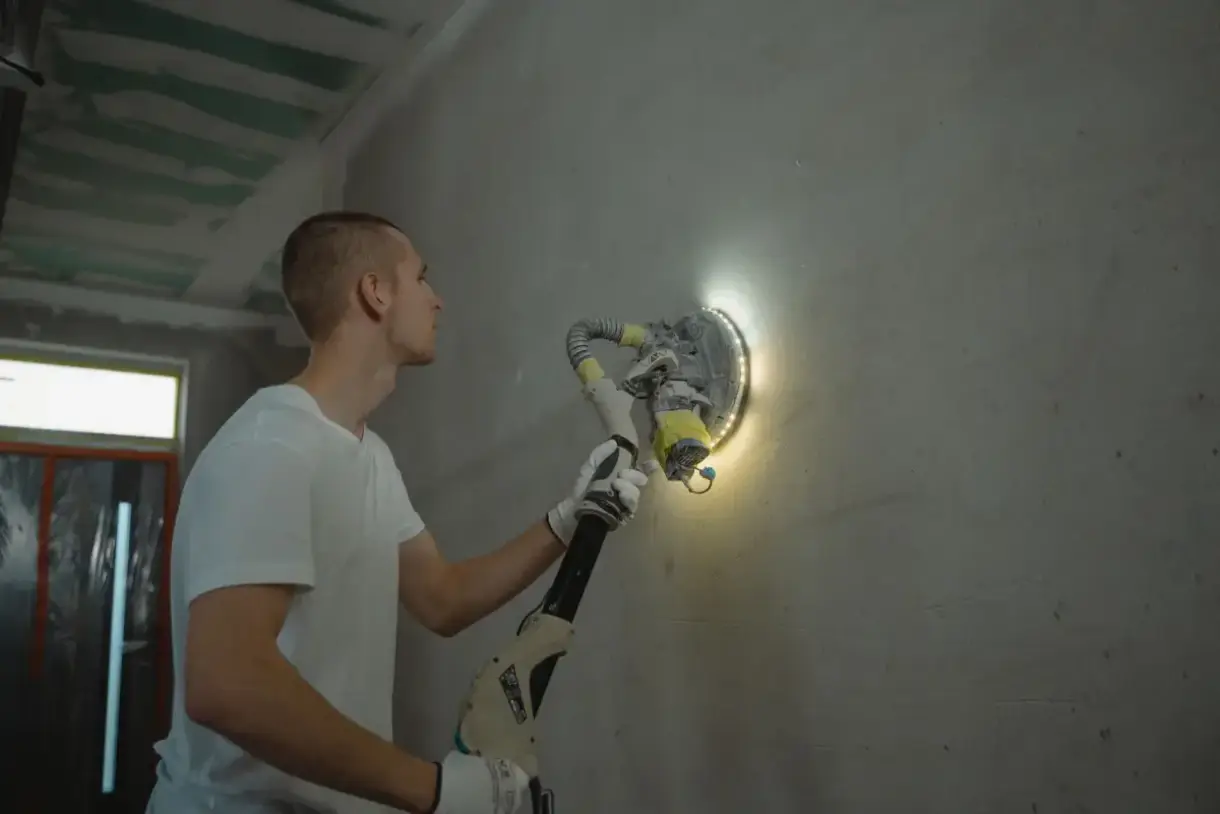
What Drywall Work Looks Like in Pulaski, WI
The 1880s and 90s Village Core
Housing built as the village established itself predates drywall as a standard material entirely, which means plaster over wood lath and a real decision at every opened wall: patch back into sound lath, or convert that section to board and carry the joint on a skim coat. Both are legitimate. Converting an entire room out of habit when the lath is still holding is money spent for nothing, and patching lath that has already let go across a wide field is a repair that will not hold.
Buildings with a Later Wing Attached
The Franciscan Publishers Building on East Pulaski Street is the clearest local example of a pattern that is common here: a three-story block built in 1941, designed by Levi A. Geniesse, with a one-story wing added in 1961 and 1962. Twenty years between the two halves means two different wall systems under one roof. Any job that crosses that seam has to be quoted as two jobs, because the older side and the newer side need different material and different technique to end up reading as one surface.
Farm Buildings Converted to Living Space
Pulaski sits in farm country and outbuilding conversions come up regularly. An outbuilding is unconditioned space with framing that was never intended to carry a finished interior, so the walkthrough covers three things before anything else: whether the framing is on a spacing that board can span, whether there is fastener backing where anything will be mounted later, and whether the building will hold temperature through the finishing phase. That last one decides the schedule more than the crew size does.
Ceilings in Century-Old Houses
A plaster ceiling that has begun to separate from its lath is a different problem from a drywall ceiling that is sagging, and the two get confused regularly. Plaster keyed into wood lath fails when the keys break — the surface flexes and sounds hollow across a field rather than at one point. Once that has happened over a large area, re-anchoring is a temporary answer at best, and converting the ceiling to board with a skim coat carrying the perimeter joint is usually the honest recommendation.
Newer Streets on the Village Edge
The newer housing on Pulaski's edges is ordinary board construction and behaves that way. What it shares with everywhere else in Northeast Wisconsin is a long heating season that drives indoor humidity down for months, shrinks framing lumber against the board fastened to it, and pushes fastener heads out into visible dimples along ceiling corners and above doorways. Refastening into solid framing and refinishing ends that cycle; refilling the same spots each spring does not.
Where This Comes Up Around Pulaski, WI
A Village in Three Counties
Pulaski's boundaries reach into Brown, Oconto and Shawano counties, with the large majority of residents in Brown. It seldom matters for the work itself, but for a parcel near a boundary it is worth confirming which county's office handles a given determination before assuming.
Rebuilt After the 1886 Fire
A fire in 1886 swept from Kewaunee County through Brown, Shawano and Oconto counties and destroyed many of the rural Polish settlements in its path. Polish Franciscans established a monastery here in 1887 to revive the community, and the village grew outward from that. The oldest surviving housing dates from that rebuilding rather than from before it.
When We’re Not the Right Call
- One small hole behind a door. A patch kit, a putty knife and a sanding sponge cost less than the trip out, and on a three-inch hole the result is honestly about the same.
- Walls where the lath behind the plaster has let go across a whole room. That is a plaster specialist's job rather than a drywall finisher's, and pretending otherwise wastes your money twice.
- A ceiling texture sprayed in the early 1970s, on a job where an invisible patch is the requirement. Sometimes the honest answer is skimming the whole ceiling flat instead of chasing a match that never quite disappears.
- Popcorn ceilings in a house built before the early 1980s, on a same-week timeline. Testing comes first and its result sets the schedule, not the calendar.
- Emergency same-day work. Pulaski sits about 15.6 miles out from Green Bay, and in a February storm nobody can honestly promise you a two-hour response over that distance. If that is the requirement, a contractor based closer is the better call.
Frequently Asked Questions
- Do you serve Pulaski, WI?
- Yes. Pulaski is about 15.6 miles northwest of Green Bay in straight-line terms, which puts it toward the outer edge of the regular coverage area but well inside it. All three county portions of the village are covered the same way.
- Does Pulaski being in three counties affect my project?
- Rarely for the drywall itself, occasionally for paperwork. The village spans Brown, Oconto and Shawano counties, and for a parcel near one of those boundaries it is worth confirming which office handles a determination before assuming. The building permit itself is generally a village matter, and Wisconsin's Uniform Dwelling Code sets the construction standard for one- and two-family dwellings statewide regardless of county.
- My Pulaski ceiling flexes when I push on it. Is that plaster failing?
- Very likely, if the house is from the village's older core. Plaster is keyed into wood lath, and when those keys break the surface separates from the lath behind it — it flexes and sounds hollow across a field rather than at a single point. Re-anchoring buys time. Where the separation covers a large area, converting the ceiling to board with a skim coat carrying the perimeter joint is the answer that actually lasts, and an honest assessment says which of the two your ceiling is.
- Can an outbuilding be converted to finished living space?
- Often, and the walkthrough answers three things first: whether the framing is on a spacing board can span, whether there is backing where fixtures and cabinets will mount later, and whether the building will hold temperature through the finishing phase. That third one is not a preference. Joint compound needs to be above roughly 50 degrees to cure, so an unheated outbuilding either gets temporary heat or gets a longer schedule.
- What does drywall and plaster work cost in Pulaski?
- The spread is wide here because the jobs genuinely differ. A plaster repair in the old core and a bedroom patch on a newer street are not the same labor, and plaster work runs above drywall work. Texture matching also runs meaningfully above a plain smooth finish. The number comes after someone sees the wall, since which of those you have is not something a phone call establishes.
Learn More
- Gypsum Association GA-214 — the published definition of drywall finish levels 0 through 5
- USG Construction Handbook — manufacturer guidance on temperature and humidity requirements for joint treatment
- Wisconsin DSPS Uniform Dwelling Code — the state code governing one- and two-family dwelling construction
Need Drywall Work Done in Pulaski, WI?
Tell us what’s going on and get an immediate on-site quote — no charge for the estimate, and no obligation to book it.
Get My Free Estimate